

Basic Requirements for Support Plates 支撑板基础安装要求
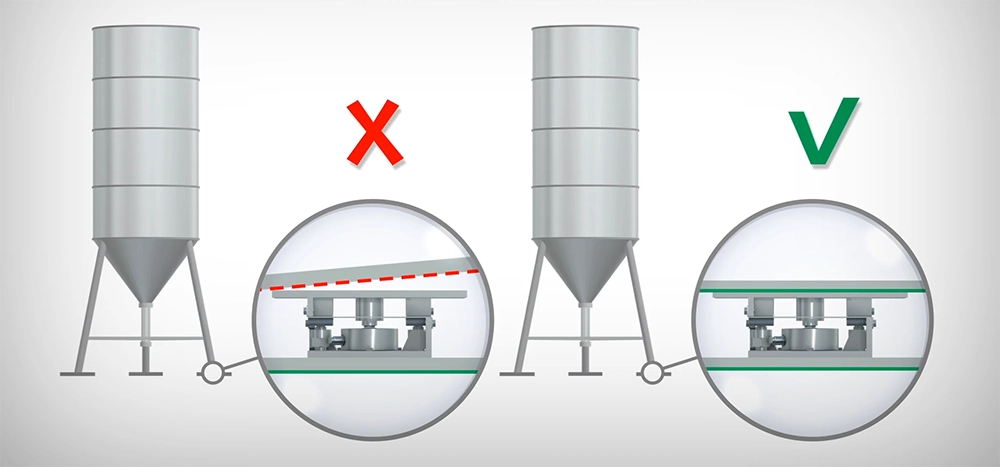
All support plates must lie on the same plane with sufficient rigidity to prevent deformation after installation.
所有支撑板需处于同一水平面,且具备充足刚性,安装后不得发生形变。
- Check the coplanarity of all support plates before installation, which is the prerequisite to guarantee weighing accuracy. 安装前必须校验所有支撑板共面度,这是保证称重精准度的前提。
- Support plates shall meet flatness standards, and the force bearing direction must be correct. 支撑板需满足平整度规范,同时保证受力方向无误。
Use Matching Fittings to Compensate Misalignment 选用适配配件补偿安装错位
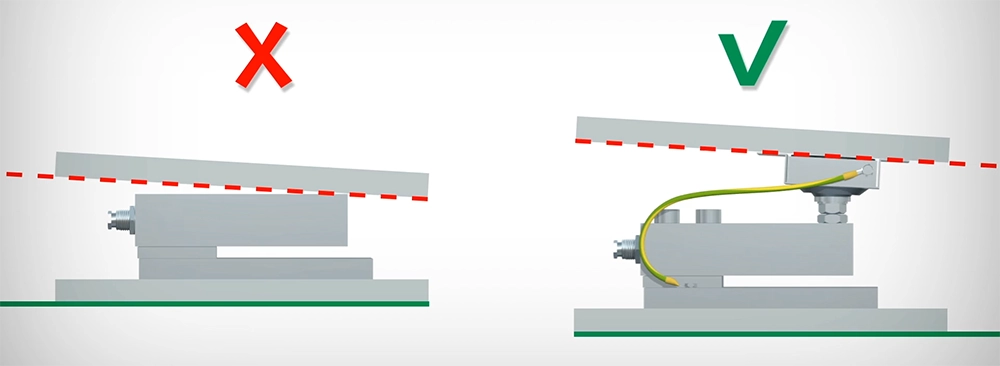
错位补偿安装示意图
- Select mounting accessories matching the offset degree of support plates to ensure all support points stay on the same horizontal plane. 根据支撑板错位幅度匹配对应安装配件,最终保证全部支撑点处于同一水平面。
- Compensation method for tiny misalignment: Use gaskets or other standard fittings to offset small gaps between support plates. 微小错位补偿方案:支撑板存在细微高低差时,通过垫片等标准配件完成找平补偿。
All Support Plates Must Be Rigid Enough 支撑板需具备充足刚性
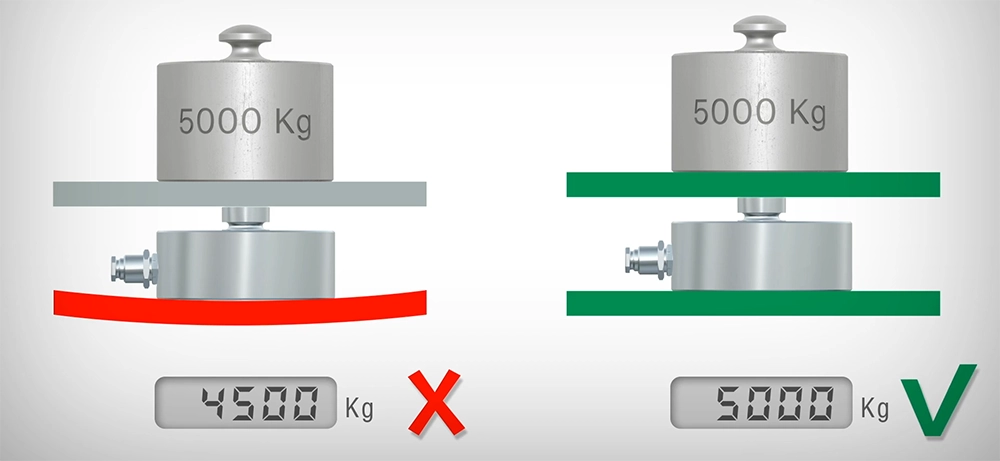
刚性对比示意图
- Rigidity standard: Support plates shall not deform under full load. 刚性标准:支撑板承受额定载荷时无弯曲、形变。
- Risk of insufficient rigidity: Deformation of support plates will alter the force state of load cells and bring obvious measurement errors. 刚性不足危害:支撑板受力变形会改变传感器受力状态,直接产生称重误差。
Flatness Standard for Shear Beam / Bending Beam / Single-Point Load Cells 剪切梁 / 弯曲梁 / 单点传感器安装平整度规范
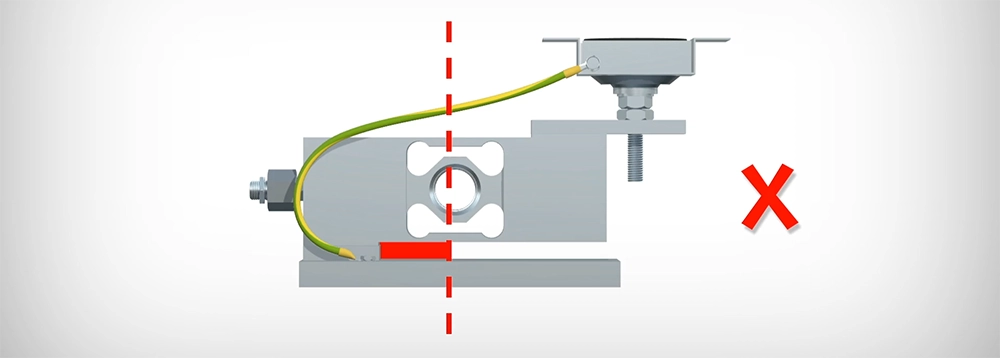
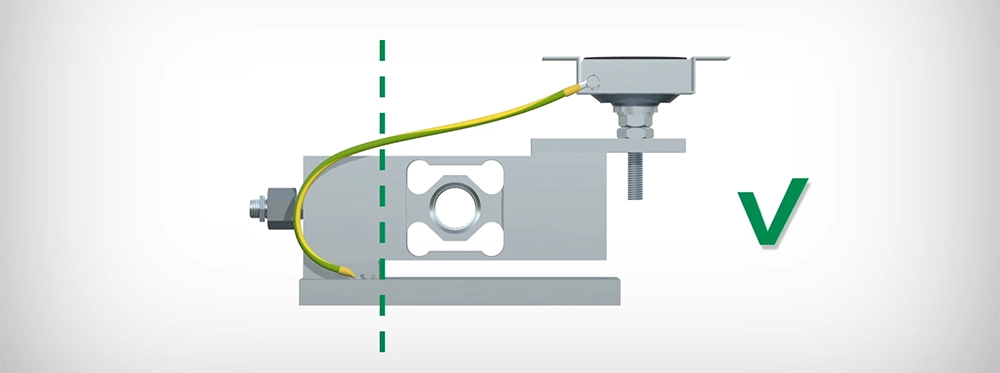
Mounting surface requirement: The mounting base must strictly comply with flatness parameters specified in the product datasheet. 安装面要求:安装底座平整度必须严格遵循产品数据表标注标准。
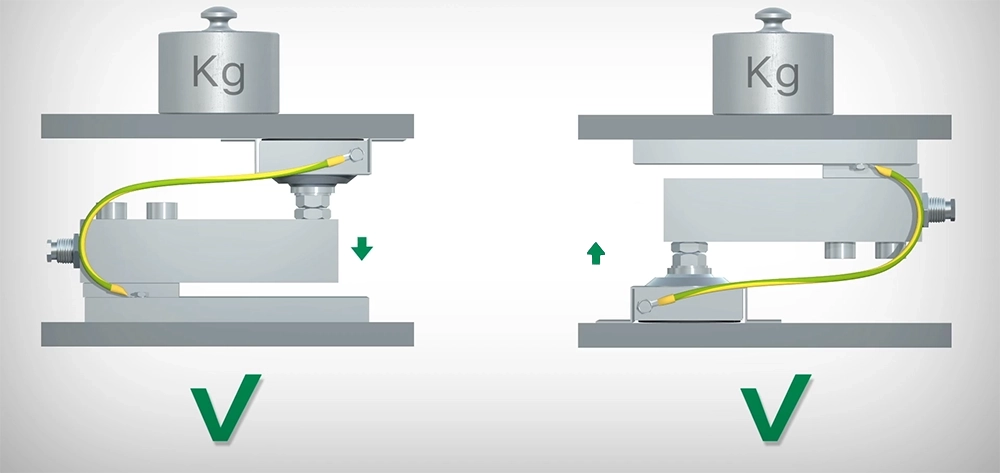
- Force direction requirement: The load applying direction shall be fully consistent with the marked force direction on datasheet or load cell body. 受力方向要求:加载方向必须与传感器本体、数据表标注受力方向完全一致。
- Consequence of wrong direction: Incorrect force direction may damage the sensor or lead to severe weighing deviation. 方向错误后果:受力方向偏差会造成传感器永久损坏,或称重数据严重失准。
Select Proper Total Range Based on Maximum System Load 根据系统最大载荷匹配传感器总量程
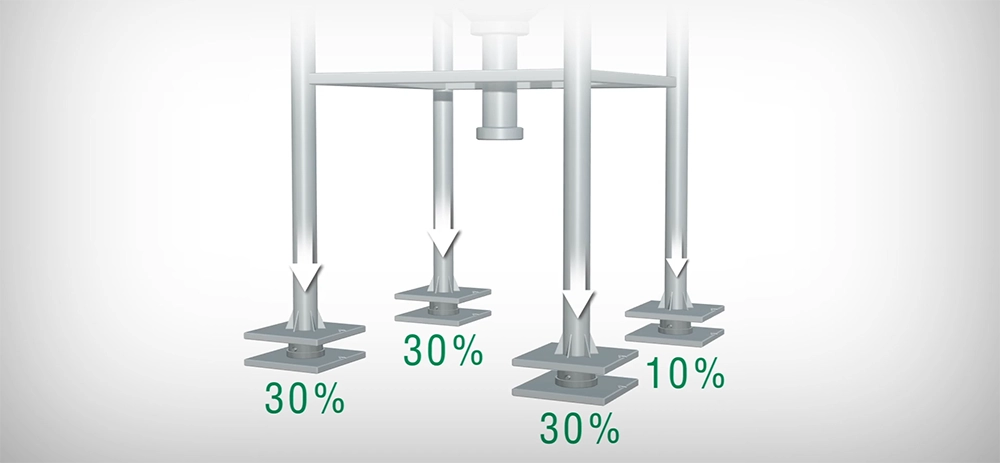
多支撑载荷分布示意图
- Range selection rule: For safety, the actual working load shall not exceed 70%~80% of the rated range of load cells. 量程选型原则:出于安全冗余设计,传感器实际工作载荷不超过额定量程的 70%~80%。
- Uneven load distribution consideration: For structures with four supporting legs, the load cannot be evenly distributed in practice. 载荷不均考量:四支撑腿称重结构,实际载荷无法均匀分摊。
- Practical experience: 85%~90% of total load may only be borne by three supports. 行业实测规律:系统 85%~90% 总载荷通常仅由 3 个支撑点位承担。
- Selection reminder: Take uneven load distribution into full account when confirming sensor range to avoid single load cell overload. 选型注意事项:确定量程时必须考虑载荷分布不均问题,防止单只传感器过载损坏。
Compliance with Loading Area Limitations 严格遵守有效加载区域规范
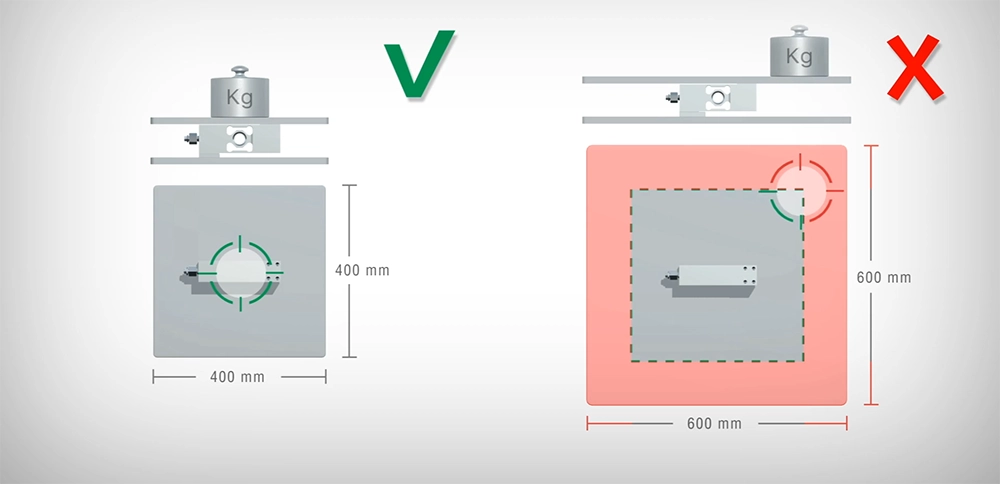
- Definition of valid loading area: Single-point load cells can only output accurate weight data within the designated area stated on datasheet. 有效加载区域定义:单点传感器仅在数据表规定区域内称重,数据才精准有效。
- Example: If the datasheet defines a 400mm×400mm loading zone, any load applied within this range will get correct readings. 举例说明:数据表标注有效加载区域 400mm×400mm,该范围内任意位置加载均称重准确。
- Consequence of exceeding loading area: Oversized mounting frame or protruding structures beyond the designated zone may damage the single-point load cell and cause persistent weighing errors. 超出加载区域后果:安装框架尺寸超标、结构凸起超出规定范围,会损坏单点传感器,且称重数值持续失真。